- KetoMind
- Posts
- Food 4 Thought Episode #5
Food 4 Thought Episode #5
Your Complete Guide to Metabolic Psychiatry and Ketogenic Living
Geoff Hargreaves
April 20, 2025
Welcome to My Keto Mind!
Hey there, Keto Curious Friend!
This week’s issue is packed with fascinating insights and practical tips — especially if you’ve ever wondered how the ketogenic diet might influence more than just your weight.
Whether you're navigating hormonal health, curious about the mental health benefits of ketosis, or simply looking for nourishing recipes, this one’s for you!
Here’s what’s inside:
🩸 Main Article: The Ketogenic Diet and Your Menstrual Cycle — A Powerful Connection
Discover how shifting your metabolism can support hormonal balance, ease menstrual symptoms, and even improve fertility.
🧠 Food 4 Thought: The Latest in Metabolic Psychiatry
Stanford’s groundbreaking research on keto for severe mental illness
New study links keto to improved mood and brain metabolism in bipolar disorder
Harvard’s McLean Hospital launches a Metabolic and Mental Health Program
Promising research on keto’s role in Autism Spectrum Disorders
🥑 Keto Kitchen: 3 Hormone-Balancing Recipes
Nourish your body and balance your hormones with:
Hormone-Balancing Salmon Bowl
Seed-Cycling Keto Granola
Anti-Inflammatory Turmeric Chai Tea Latte
💬 Join Our Community!
Connect, learn, and share your journey with others embracing the metabolic health path.
👉 Dive into the full articles below — your hormones (and your brain!) will thank you.
/

Main Article: The Ketogenic Diet and Your Menstrual Cycle: A Powerful Connection
Your menstrual cycle plays a key role in your overall health, and it's not uncommon for many women to face challenges like irregular cycles or painful periods that can disrupt daily life.
Here's an interesting tidbit: tweaking your diet might make a difference! Recent research suggests that the ketogenic diet could be a game-changer for regulating your menstrual cycle and boosting hormonal health.
By cutting down on carbs and upping your intake of healthy fats, this diet shifts your body's primary energy source from glucose to ketones.
This switch not only aids in weight management but also appears to have positive effects on your reproductive system.
How Keto Influences Your Cycle
When you enter ketosis, several key changes occur that can positively impact your menstrual cycle:
Insulin Regulation: High insulin levels can disrupt reproductive hormones. By lowering insulin through a low-carb approach, keto helps restore hormonal balance.
Reduced Inflammation: Chronic inflammation can contribute to menstrual irregularities. The anti-inflammatory nature of ketosis may help alleviate this underlying issue.
Weight Management: For women carrying excess weight, even modest weight loss can help regulate cycles. Keto's effectiveness for weight management makes it doubly beneficial.
Hormone Production: Your body uses dietary fats to create sex hormones. The abundant healthy fats in a keto diet provide the building blocks needed for proper hormone synthesis.
The Science Behind It
A fascinating study published in PLOS One in 2024 discovered that achieving ketosis, either through diet or supplements, can help reset or restart menstrual cycles.
After just six weeks, women following ketogenic diets noticed their periods becoming more frequent and intense.
The benefits are even more pronounced for women with PCOS (Polycystic Ovary Syndrome).
According to research in Frontiers in Nutrition, a ketogenic diet not only helped restore menstrual cycles but also significantly boosted pregnancy rates in women with PCOS compared to previous studies.
Making Keto Work for Your Cycle
If you're considering keto to support your menstrual health, here are some practical steps to take:
Start Gradually: Rather than jumping immediately to extremely low carbs, consider reducing carbs progressively over several weeks.
Focus on Nutrient Density: Include plenty of low-carb vegetables, high-quality proteins, and varied fat sources to ensure you're getting essential nutrients.
Consider Cycle Timing: Some women find success with a cyclical approach—slightly increasing carbs during the luteal phase (week before your period) when energy needs may be higher.
Hydrate and Supplement: Drink plenty of water and consider electrolyte supplementation, as dehydration can worsen menstrual symptoms.
Track Your Results: Keep a journal of your cycle changes, energy levels, and any symptoms to identify patterns and adjust your approach accordingly.
Who May Benefit Most
The ketogenic diet shows particular promise for women with:
Irregular or absent periods
PCOS
Insulin resistance
Hormonal imbalances
Significant menstrual-related symptoms
Remember, your body is unique, and what works for others may not work identically for you.
If you're dealing with significant menstrual issues, consulting with a healthcare provider who understands metabolic approaches is always recommended.
By working with your body's natural metabolic pathways, the ketogenic diet offers a promising approach to supporting your menstrual health and overall well-being.
Food 4 Thought: Latest in Metabolic Psychiatry
1. Stanford Study Shows Keto Diet Improves Severe Mental Illness
Could Food Be the Missing Link in Mental Health?
If you or someone you love lives with a serious mental health condition like bipolar disorder or schizophrenia, you probably know how tough it can be to find treatments that truly help — especially ones that don’t come with heavy side effects.
But there’s some exciting new research out of Stanford Medicine that might give you hope, and it starts with what’s on your plate.
In a small but groundbreaking clinical trial published in April 2024, researchers found that the ketogenic diet — a high-fat, low-carb way of eating — might do more than just help with weight loss.
It could actually play a powerful role in stabilizing your brain and improving mental health.
The people in the study weren’t just trying to lose weight.
They were living with severe mental illnesses, and many were also struggling with metabolic syndrome, a common (and dangerous) mix of conditions like high blood pressure, insulin resistance, and weight gain — often worsened by psychiatric medications.
But when these participants switched to a ketogenic diet, the results were striking. Not only did many reverse their metabolic issues, they also reported significant improvements in their psychiatric symptoms.
So, why does this matter? The research suggests that changing your brain’s energy source — from glucose to ketones — could help reduce inflammation and balance brain activity.
These two factors are believed to play a big part in mood disorders, psychosis, and other mental health challenges.
Reference:
Stanford Medicine (2024). Ketogenic diet shows promise for patients with serious mental illness. Nature Mental Health. https://doi.org/10.1038/s44220-024-00074-2
2. New Bipolar Disorder Study Shows Ketogenic Diet Improves Brain Metabolism and Mood
A new study released in February 2025 found that a ketogenic diet leads to significant mental and physical health benefits for individuals with bipolar disorder.
Participants following the ketogenic approach showed improved brain metabolism, enhanced mood stability, and increased energy levels.
Interestingly, the researchers discovered that blood ketone levels directly correlated with improvements in both mental and physical symptoms.
This suggests that monitoring ketone levels could potentially be used as a biomarker to track treatment effectiveness.
The study represents a major advancement in the field of metabolic psychiatry, offering new hope for patients who haven't responded well to conventional treatments alone.
3. McLean Hospital Unveils Bold New Mental Health Approach
McLean Hospital, a Harvard Medical School affiliate, recently established the Metabolic and Mental Health Program to advance the emerging field of metabolic psychiatry. This innovative program brings together research, education, and clinical practice to explore how metabolic interventions can improve mental health outcomes.
The program focuses on understanding the connections between metabolism and mental health, with particular emphasis on how dietary approaches like the ketogenic diet might benefit patients with treatment-resistant conditions.
"We're seeing compelling evidence that metabolic dysfunction underlies many psychiatric conditions," says the program director. "By addressing these metabolic issues, we may be able to improve outcomes for patients who haven't responded to traditional treatments."
4. Ketogenic Diet Shows Promise for Autism Spectrum Disorders
Recent research has brought to light the intriguing possibility that the ketogenic diet could offer significant benefits for individuals diagnosed with autism spectrum disorders (ASD).
This dietary approach, which is high in fats and low in carbohydrates, has been the subject of various studies due to its potential impact on neurological and metabolic health.
A particularly noteworthy study conducted in 2024 revealed that a modified version of the ketogenic diet can lead to substantial changes in the gut microbiome, which is the community of microorganisms living in the digestive tracts.
These changes in gut bacteria are believed to play a crucial role in reducing inflammation throughout the body, which is often a concern in individuals with autism.
Moreover, the study highlighted that this dietary intervention could influence brain-related molecules, potentially leading to positive outcomes in children with autism.
The alterations in these molecules were associated with noticeable improvements in key areas such as social skills and communication abilities.
Additionally, there was a marked reduction in repetitive behaviors, which are among the core symptoms of ASD.
These findings suggest that the ketogenic diet might be addressing some of the underlying biological challenges associated with autism by modifying metabolism and decreasing systemic inflammation.
The implications of this research are profound, as they underscore the potential of dietary changes as a valuable treatments for neurodevelopment conditions, offering hope to families looking for additional approaches to support their children.
Keto Kitchen: 3 Hormone-Balancing Recipes

1. Hormone-Balancing Salmon Bowl
Ingredients:
6 oz wild-caught salmon fillet
2 cups cauliflower rice
1 tbsp coconut oil
1 avocado, sliced
2 tbsp pumpkin seeds
1 tbsp flaxseeds, ground
1 cup spinach
2 tbsp olive oil
1 tbsp lemon juice
Sea salt and pepper to taste
Instructions:
Season salmon with salt and pepper.
Heat coconut oil in a skillet over medium-high heat.
Cook salmon skin-side down for 4 minutes, then flip and cook for 2-3 minutes more.
In another pan, sauté cauliflower rice until tender, about 5 minutes.
Arrange cauliflower rice in a bowl, top with spinach, salmon, avocado, and seeds.
Drizzle with olive oil and lemon juice.
Why it supports hormones: The omega-3 fatty acids in salmon reduce inflammation, while avocado provides healthy fats essential for hormone production.
Pumpkin and flaxseeds contain lignans that help balance estrogen levels.
2. Seed-Cycling Keto Granola
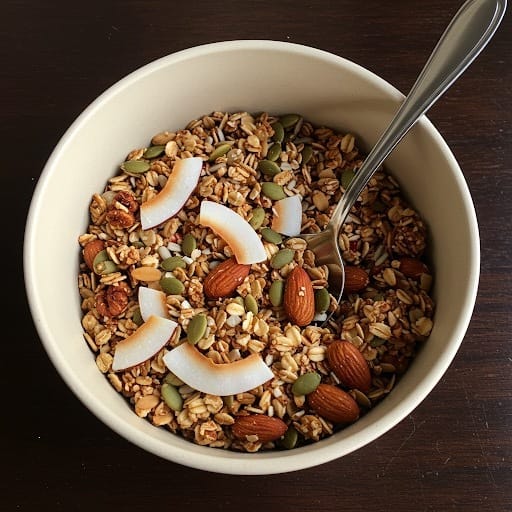
Ingredients:
1 cup mixed nuts (almonds, walnuts, pecans)
2 tbsp flaxseeds
2 tbsp pumpkin seeds (follicular phase) OR 2 tbsp sesame seeds (luteal phase)
2 tbsp sunflower seeds (follicular phase) OR 2 tbsp sesame seeds (luteal phase)
2 tbsp coconut flakes, unsweetened
1 tbsp coconut oil, melted
1 tsp cinnamon
1 tsp vanilla extract
Stevia or monk fruit to taste
Instructions:
Preheat oven to 300°F (150°C).
Roughly chop nuts or pulse briefly in a food processor.
Mix all dry ingredients in a bowl.
Add melted coconut oil, vanilla, and sweetener, stirring to coat evenly.
Spread mixture on a baking sheet lined with parchment paper.
Bake for 15-20 minutes, stirring halfway through.
Allow to cool completely before storing in an airtight container.
Why it supports hormones: This granola incorporates seed cycling—a practice of consuming specific seeds during different phases of your menstrual cycle to support hormonal balance.
Flax and pumpkin seeds support estrogen production during the follicular phase, while sesame and sunflower seeds support progesterone during the luteal phase.
3. Anti-Inflammatory Turmeric Chai Tea Latte

Ingredients:
1 cup unsweetened almond milk
1 tbsp MCT oil or coconut oil
1/2 tsp ground turmeric
1/4 tsp ground ginger
1/4 tsp ground cinnamon
Pinch of black pepper
Stevia or monk fruit to taste
Optional: 1 tsp grass-fed collagen powder
Instructions:
Heat almond milk in a small saucepan until just before boiling.
Transfer to a blender along with all other ingredients.
Blend on high for 30 seconds until frothy.
Pour into a mug and garnish with a sprinkle of cinnamon.
Why it supports hormones: Turmeric is a powerful anti-inflammatory that can help reduce menstrual pain.
The healthy fats from MCT oil provide fast energy and support hormone production. Black pepper enhances turmeric absorption, while cinnamon helps regulate blood sugar levels, which further supports hormonal balance.
/WHAT'S ON YOUR MIND?
📊 QUICK POLL: What aspect of the keto lifestyle has been most challenging for your neurodiverse loved one?
Join Our Community!
Are you interested in exploring how the ketogenic diet and metabolic approaches can transform your mental health or support neurodiversity? Join our growing community of health-conscious individuals!
Subscribe to My Keto Mind Newsletter:
Weekly evidence-based articles
Exclusive recipes and meal plans
Expert interviews
Community success stories
First access to webinars and events
Facebook: My Keto Mind
Instagram: @myketomind
X: @myketomind
Special Interest Groups:
Parents of Neurodivergent Children
Women's Hormonal Health
Mental Health Warriors
Keto for ADHD/Autism
Coming Next Month: "Keto for Kids: Safe Approaches for Supporting Neurodivergent Children"
Reply